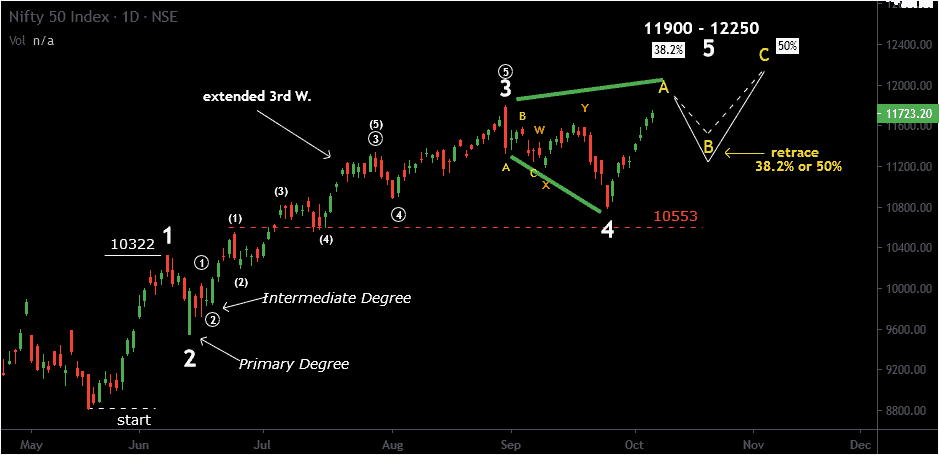
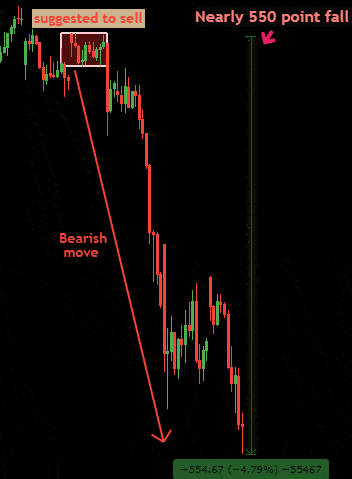
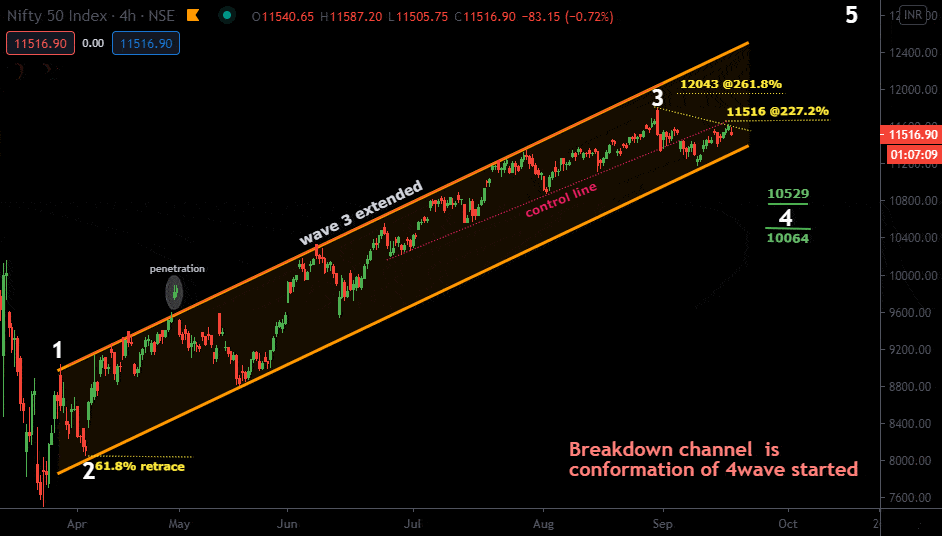
Bank-nifty already started to look for the 4th Wave.
From Support : 32.8% at 23003=23134 & 50% at 22327, The price can travel for the 5th wave which can be above the 3rd wave.
Basics of Dow theory trading strategy forecasts
This CALL was given to our subscribers on 20-08-2020 (Our Target reached)
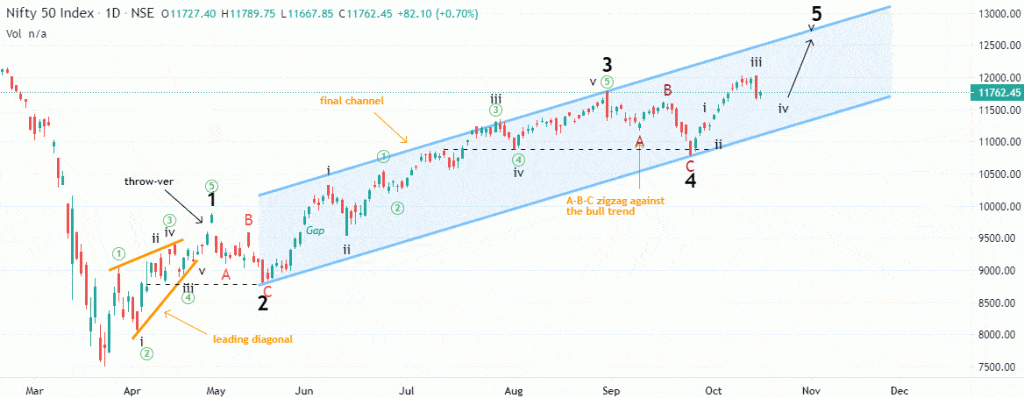
NIFTY50 NSE:
By keeping today’s low as stop-loss @11290, BUY 11310 second buy level 11325 TARGET 11375
Technical reason to buy NIFTY50 has open gap down to fill the gap it will move up, second over all market is bullish, third in a parallel channel nifty has taken support and moving up direction. You can still keep stop loss down and trade, But strictly follow stop-loss.
To become a subscriber, subscribe to our free newsletter services. Our service is free for all.

What is Dow theory?
The Dow theory is a financial theory that says the market is in an up-trend if one of its averages (i.e. industrials or transportation) advances above a previous important high and is accompanied or followed by a similar advance in the other average. For example, if the Dow Jones Industrial Average (DJIA) climbs to an intermediate high, the Dow Jones Transportation Average (DJTA) is expected to follow suit within a reasonable period of time.
What Is Support?
Support refers to the price level that an asset does not fall below for a period of time. An asset’s support level is created by buyers entering the market whenever the asset dips to a lower price. In technical analysis, the simple support level can be charted by drawing a line along the lowest lows for the time period being considered. The support line can be flat or slanted up or down with the overall price trend. Other technical indicators and charting techniques can be used to identify more advanced versions of support.
What Is Resistance?
Resistance, or a resistance level, is the price at which the price of an asset meets pressure on its way up by the emergence of a growing number of sellers who wish to sell at that price. Resistance levels can be short-lived if new information comes to light that changes the overall market’s attitude toward the asset, or they can be long-lasting. In terms of technical analysis, the simple resistance level can be charted by drawing a line along the highest highs for the time period being considered. Resistance can be contrasted with support.
What is support become resistance?
When price breaks the resistance, and after it will be created a support that same level this situation was called by support become resistance.
What is resistance become support?
When price breaks the support, and after it will be created a resistance that same level this situation was called by resistance become support.
How To Read The Support Level On the Chart?
Share prices which are subject to recurrent oscillations command the attention of investors at all times. Aiding investors make their move; it is significant for them to read the resistance level on the chart, which can bring a chance for them to make a good buy when the prices are balanced to rise higher.
How To Read The Resistance Level On Chart?
In disparity, when the price enters the resistance level, the market is noticeable of traders’ combat with a pressure to sell, when the price of the stock is balanced to fall further, going by its past performance.
Hence, these two factors are important for every investor to base his entry and exit moves in the share market when these determinants go a long way in representing the direction of the price of the stock, whether it will rise or drop.
Chart description:
The Stock has come to its support level in a parallel channel, investor will be more active at this level because of stock level higher high level.
“Buy 2236 or current level by keeping stop-loss 15-25 down and go for long”.
TABLE OF CONTENTS
Candlestick and Chart Patterns (15 Days)
7 Most Important Candlestick Chart Patterns
- Gap Down Chart Pattern
- Gap Up Chart Pattern
- Gravestone Short-term Chart Pattern
- Hammer Candle Stick Chart Pattern
- Hanging Man Short-term Stock Chart Pattern
- Inverted Hammer Stock Chart Pattern
- Shooting Star Candle Stick Pattern
Top 2 Bearish Chart Patterns
Top 6 Bullish Chart Patterns
- Engulfing Line (Bullish) Chart Pattern
- Exhaustion Bar Chart Pattern (Bullish)
- Inside Bar Chart Pattern
- Island Bottom Chart Pattern
- Key Reversal Bar (Bullish) Chart Pattern
- Two Bar Reversal (Bullish) Chart Pattern
Indicators & Oscillators (12 Days)
Bullish or Bearish Indicators
Bullish or Bearish Oscillators
- Bollinger Bands Oscillator
- Commodity Channel Index (CCI)
- Fast Stochastic Oscillator
- Know Sure Thing (KST) Oscillator
- Momentum Oscillator
- Moving Average Convergence/Divergence (MACD) Oscillator
- Relative Strength Index (RSI)
- Slow Stochastic Oscillator
- Williams %R Oscillator
Classic Chart Patterns (29 Days)
Bearish Classic Chart Patterns
- Continuation Diamond (Bearish) Chart Pattern
- Continuation Wedge (Bearish)
- Descending Continuation Triangle Chart Pattern
- Diamond Top Chart Pattern
- Double Top Chart Pattern
- Downside Break Chart Pattern – Rectangle
- Flag Bearish Chart Pattern
- Head and Shoulders Top Chart Pattern
- Megaphone Top Chart Pattern
- Pennant Bearish Chart Pattern
- Rounded Top Chart Pattern
- Symmetrical Continuation Triangle (Bearish)
- Top Triangle/Wedge Chart Pattern
- Triple Top Chart Pattern
Bullish Classic Chart Patterns
- Ascending Continuation Triangle Chart Pattern
- Bottom Triangle Or Wedge Chart Pattern
- Continuation Diamond (Bullish) Chart Pattern
- Continuation Wedge Chart Pattern (Bullish)
- Cup with Handle Bullish Chart Pattern
- Diamond Bottom Chart Pattern
- Double Bottom Chart Pattern
- Flag Bullish Chart Pattern
- Head and Shoulders Bottom Chart Pattern
- Megaphone Bottom Chart Pattern
- Pennant Bullish Chart Pattern
- Round Bottom Chart Pattern
- Symmetrical Continuation Triangle Bullish
- Triple Bottom Chart Pattern
- Upside Breakout Chart Pattern – Rectangle
Best Trading Theories (4 Days)
- Basics of Dow theory trading strategy forecasts
- Motive (Impulse) Waves
- Corrective Waves
- Wyckoff Chart Reading
Kind attention: this course is helpful for beginner and intermediate traders. It’s free for everyone. Advanced modules, trading strategies, and data (in-depth) are available for Moneymunch’s premium subscribers.
Get free important share market ideas on stocks & nifty tips chart setups, analysis for the upcoming session, and more by joining the below link: Stock Tips
Have you any questions/feedback about this article? Please leave your queries in the comment box for answers.
HDFC Bank Stock analysis, via Elliott wave theory
After forming a higher-high the stock has made next peak lower Presently if the stock move above 1071 it can be still bullish.
Wave 4 was finish at 942.65, Wave 5 is 0.78% of wave 4. In wave 5 mentioned a sub-wave with roman latter. A is retraced the range at 100% to1.61% of wave 5.
Wave b is 61.8% of wave A.
Wave 4 can not overlap wave 1, but sometimes it overlaps still follow Elliott wave theory, wave 2 can never exceed the start of wave 1.
Information on Elliott waves trading analysis to read click here
To become a subscriber, subscribe to our free newsletter services. Our service is free for all.
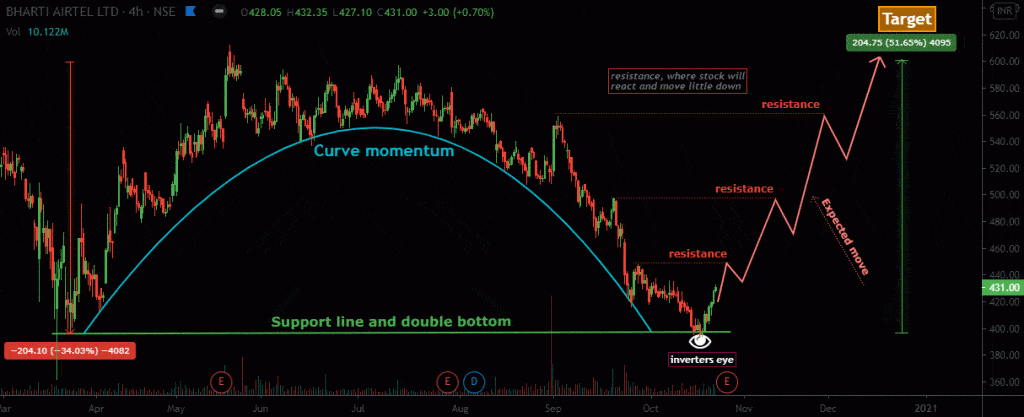
ITC convenient stock analysis
ITC is forming a triangle, It is more likely to follow its support and move up direction.
ITC buy 191
Stop-loss 189
Target 199
To become a subscriber, subscribe to our free newsletter services. Our service is free for all.
Information on Elliott waves trading analysis
Yesterday we had provided this:
RELIANCE NSE:
Buy reliance 2018
Stop-loss 2009
Target 2057
What is Elliott wave theory?
Elliott wave theory is a method of technical analysis that looks for red current long-term price patterns related to persistent changes in investor sentiment and psychology, the theory identified as impulsive waves that set up a pattern and corrective waves that oppose the larger trend.
The Elliott wave theory was developed by Ralph.nelson, Elliott to describe price movements in financial market, in which he observed and identified recurring.fractal wave patterns wave can be identified in stock price movements and in consumer behavior investors trying to profit from a market trend could be described as” riding a wave” a larger, strong movement by homeowners to replace their existing mortgages with new ones that have better term is called a refinancing wave.
To become a subscriber, subscribe to our free newsletter services. Our service is free for all.
How do Elliott waves work in our trade?
Some technical analysts try to profit from wave patterns in the stock market using the Elliott wave theory, this hypothesis says that sock price movements can be predicted because they move in repeating up and down patterns called waves they are created by investor psychology.
The theory identifies several types of waves including motive waves, the subject can not all traders interpret the theory the same way to agree that it is a successful strategy. The whole idea of wave analysis itself does not educate to a regular blueprint information, where you simply follow the traction, unlike most other price information, wave analysis offer signal into text dynamic and helps you understand price movements in a much deeper way.
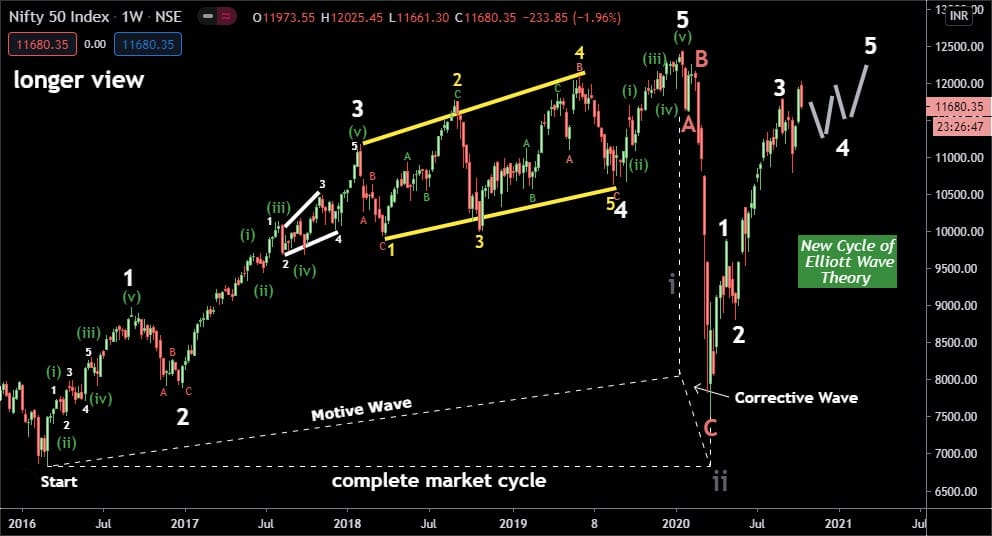
The Elliott wave principle consists of impulse and corrective wave at its core
Impulsive wave consists of five sub-wave that make next movement in the same direction as the trend of the next largest degree this pattern is the most common motive wave and the easiest to spot in a market, like all motive wave, it consists of five sub wave three of them are also motive waves, and two corrective waves .this is labeled as a5-3-5-3-5 structure, which was shown above
Corrective wave-consist of three, or combination of three, sub wave that make at motion opposite to the trend of the next largest degree like all motive waves, its goal is to move the mark in the direction of the trend
Also, like all motive consists of five sub waves the difference is that the diagonal looks like either an expanding or contracting wedge .also the sub-wave of the diagonal may not have a count of five, depending on what types of diagonal is being observed.as with the motive waves, each sub wave, and sub wave three of the diagonal may not be the shortest wave.
To be CONTINUE this research in next “STOCK ANALYSIS”
Full information how to trade using MACD INDICATOR
What is MACD indicator?
MACD is a trend following indicator. MACD indicator is created by two EMI(exponential moving average)indicators,MACD indicator is the one type of moving average indicator.
The MACD indicator have 4 main point important
1.MACD line(fast line)-indicated with green line
2. Signal line (slow line)-indicated with green line
3. Zero line(baseline and center line)
4. MACD histogram
Exponential Moving Average (EMA)-calculation
MACD line (12 day EMA-26day EMA)
signal line (9 day EMA of MACD line)
MACD histogram (MACD line-signal line)
IMPORTANT NOTICE FOR OUR SUBSCRIBERS:
To become a subscriber, subscribe to our free newsletter services. Our service is free for all.
How to trade with MACD indicator-(MACD-MOVING AVERAGE CONVERGENCE DIVERGENCE)
This indicator is invented by Gnvented in.MACerald Apple,this indicator is the most important and popular indicator for trading…
this indicator used in:
-share market
-commodity market
-forex market
-future market
MACD Indicator is very helpful for long term trader and short term trader, similarly.
NOTE– The most important MACD indicator is when you trade with MACD then your stop loss is in very close range.when your trade triggered stop loss it can give you a very small loss……it is helpful to take a smaller loss.
How does MACD work?
In this indicator have 2-important line, MACD line and signal line. MACD line and signal line provide a signal moving around zero line. When the MACD line and signal line are crossed over then it is given a signal for buying and selling.
The MACD indicator have 2 types of cross over
- Positive cross over(bullish crossover)
- Negative cross over(bearish crossover)
When the MACD line is cross over down-up, it is a signal for buying-positive cross over-BULLISH TREND. When the MACD line is cross over up-down, it is a signal for selling-negative cross over-BEARISH TREND.
In MACD Why is the zero line important?
When positive crossover created upside of zero line and positive crossover created in downside of zero line and after both lines going the upside of zero line -STRONG BULLISH TREND. When negative crossover created downside of zero line and negative crossover created in upside of zero line and after both lines going the downside of zero line -STRONG BEARISH TREND.
Note: When a positive crossover is created in the downside of zero line it is not a strong bullish trend then both lines cross over upside it is a strong bullish trend. If the both line is not cross over-wishaw. When negative crossover is created in the upside of zero line it is not a strong bearish trend, then both lines cross over downside it is a strong bearish trend. If the both line is not cross over-wishaw.
MACD indicator double top and double bottom
When MACD is created a double top in upside of zero line then more chances to trend reversal. When MACD is created a double bottom in downside of zero line then more chances to trend reversal.
How does MACD-histogram help?
MACD-histogram shows a trend and momentum in the positive divergence(trend strength) and negative(trend weakness) divergence. HISTOGRAMS DIVERGENCE-(1)histogram positive divergence(2)histogram negative divergence.
(1)histogram positive divergence-then price goes down, MACD goes down, but histogram will go up it is signal of bullish.
(2)histogram negative divergence-then price go up, MACD go up, but histogram will be going down it is sign of be
MACD divergence:(1)positive divergence(bullish divergence)(2)negative(bearish divergence)
(1)positive divergence(bullish divergence):-when price will move in downside and MACD gives a signal of up movement it is signal of positive divergence.
(2)negative(bearish divergence):-when price will move in upside and MACD gives a signal of down movement, it is a signal of negative divergence.
How does MACD help in buying and selling?
(1)when MACD line is cross over down-up, it is signal for buying-positive cross over-buying signal
(2)when a MACD line is cross over up-down, it is a signal for selling-negative cross over-selling signal.
Note: when MACD is created a double top in upside of zero line then more chances to trend reversal. When MACD is created a double bottom in downside of zero line then more chances to trend reversal
HISTOGRAMS DIVERGENCE-(1)histogram positive divergence(2)histogram negative divergence.
(1)histogram positive divergence-buy
(2)histogram negative divergence-sell.


Unlock This Article