Stock Market Weekly Report

The Indian stock market declined for second consecutive week tracking weak global shares after

a Republican proposal to deal with a US fiscal crunch failed to get enough support, deepening

uncertainty over the US can avert the “fiscal cliff” of automatic spending cuts and tax increases

set to start Jan. 1. 

Some key highlights during the week

•  The RBI kept repo rates – the rate at which RBI lends to banks—and cash reserve ratio (CRR)

unchanged. However, the central bank has hinted that it may cut policy rates next month. The

government’s bold declaration not to exceed the original borrowing target of Rs.5.7 lakh crore

for the current fiscal has been a great comfort for the banks. 

•  Global rating agency Standard and Poor’s (S&P) has said it expects India to grow by 6.5%

during 2013, amidst the possibility of global economic recovery continuing during the year. 

•  Foreign direct investment inflows into India jumped 67% in October to $1.94 billion, a

government statement said on Friday, but inflows for the current financial year were still down.

Total FDI inflows in the first seven months for the current fiscal year that began in April were

down 42% from a year earlier at $14.79 billion.

•  India’s holding of US government debt securities has declined for the second consecutive

month, even as many other countries including China, Japan, Brazil and Russia hiked their

exposure to American treasury bonds. As per the latest data released by the US Department

of Treasury, India’s holding of treasury securities stood at $58.9 billion (over Rs 3,20,000

crore) at the end of October 2012 — marking the second straight month of decline after an

uptrend for seven continuous months. However, the holdings of countries like China, Japan,

Brazil, Switzerland, Russia, France and Canada rose during October. At the end of the month,

India was the 18th largest holder of the US treasury bonds, while China was the largest

foreign owner of these securities followed by Japan, Brazil, Taiwan, Switzerland, Russia,

Luxembourg, Hong Kong, Belgium and the UK in the top ten.

•  The Government lowered the growth projection  for the current financial year to 5.7-5.9%,

while pitching for supportive monetary and fiscal policies to improve investor confidence. The

economy, it added, would have to record a growth rate of 6% in second half of the current

financial year to reach the desired growth rate. It grew by 5.4% during April-September 2012-

13. The economic survey had pegged the growth rate at 7.6% for this fiscal. To achieve 5.7-

5.9% growth, the analysis said, “both fiscal and monetary policy, however, would need to be

supportive to sustain investor confidence.  The government will also have to address the

concerns relating to structural supply side bottlenecks”. 

US Markets

US markets weakened this week, as a new setback in talks to avert a U.S. fiscal crisis and

evidence of Europe’s ongoing economic difficulties stoked investor nerves.  For the week, the

three major U.S. stock indexes posted gains, with Dow Jones up 0.4%, S&P 500 up 1.2% and

Nasdaq Composite Index up 1.7%.

Key Highlights during the week:

•  The December 2012 Empire State Manufacturing  Survey indicates that conditions for New

York manufacturers continued to decline at a modest pace. The general business conditions

index was negative for a fifth consecutive month, falling three points to -8.1. The new orders

index dropped to -3.7, while the shipments index declined six points to 8.8. At 16.1, the prices


The markets may remain volatile next week as traders roll over positions in the F&O segment

from the near month December 2012 series to January 2013 series. The near-month December

2012 derivatives contracts expire on Thursday, December 27, 2012. Investors are likely to keep

a close on watch on the developments on the US ‘fiscal cliff’ which could especially affect

software service exporters such as Infosys and TCS. Indian companies will start unveiling Q3

December 2012 results from mid-January 2013. 

To become a subscriber, subscribe to our free newsletter services. Our service is free for all.
Continue reading

Commodity MCX & NCDEX Gold, Silver, Crude oil, Natural gas, Zinc, Jeera

You know, world’s fastest growing market is commodity market and in it crazy movers are Gold and Silver. One more thing you should to know, ‘The major monetary metal in history is silver, not gold’. Remember, your TV is lying to you when it says the ‘demand for Gold and silver’ is decreasing. Anyway, stop struggling and start making money with me.

mcx-crude-oil

Let me start with Crude oil. First, click here and read our crude oil report now. Okay, now I hope you got it what I want to say you. Go and sell crude oil with targets: 4861-4841-4800. Contract changed that’s why little levels will change. Yes, stop loss and exact levels for subscribers only!

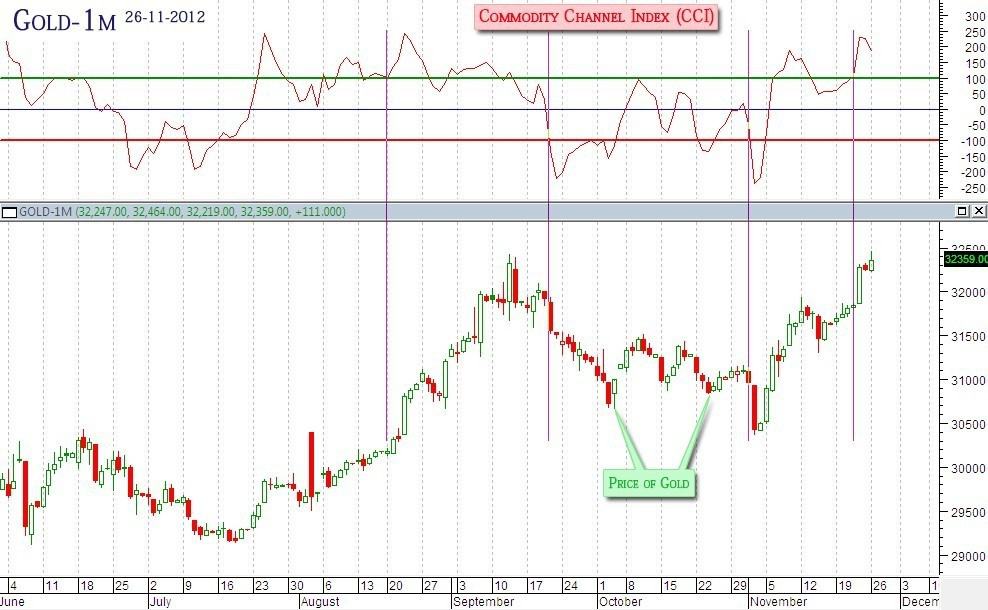
I think, should not say more about MCX Gold after above chart.

mcx-natural-gas

First click here and read our past natural gas report with chart. If MCX Natural gas not close below to hurdle 178.5 then it will kiss 190-200-214+.
street figher woman gif
On this 21st, Natural gas was kissed our first target!

ncdex jeera

NCDEX Jeera is very crazy item in Angri commodities. Free readers, I am just your well-wisher and want to say you. Today it’s looking downward. More information about Jeera to subscribers only.

mcx-silver

SILVER, ZINC & JEERA REPORT IS BELOW. FOR TO SEE It Log IN NOW AND ONLY SUBSCRIBERS CAN READ IT. To become a subscriber, subscribe to our free newsletter services. Our service is free for all.

We will update soon Lead and Nickel Chart soon.

Continue reading

In 2013, EURUSD Can Target 1.36 – 1.44

The pro-growth monetary policy should mildly support economies throughout the world in 2013, despite the persistence of different risk factors. The US dollar may decline further. What will happen to stocks and bonds?

US dollar: More declines ahead

The EURUSD played a starring role during the last part of 2012. This uptrend, which started in July after President Draghi declared the European Central Bank’s (ECB) willingness to buy unlimited bonds, is still ongoing. The market is meeting an important resistance at 1.33 and corrections are therefore possible. Uncertainty exists regarding Italy’s capability of forming a meaningful government after the political elections next year in February. However, the medium-term uptrend remains intact for the Euro against the US dollar. The ECB should not cut rates short-term, as the economy, though weak, is improving. The latest Purchasing Manager’s Index (PMIsurvey signaled that productivity has bottomed out and should start to rise over the medium-term. The ECB’s “wait and see” approach can support the Euro to reach higher levels. Since 1977, bull-moves within long-term bull cycles have lasted between 20% and 30%, top to bottom, before fading away. Consequently, an increase above 1.3350 can raise the price of the euro to 1.36, and eventually to 1.44.

Although Japan is in recession, Japanese housing starts, industrial production, and consumer sentiment have recently been positive. Prime Minister Abe has become more accommodative in his tone toward the economy. The Japanese yen could experience less pressure in the months ahead. Currently, USDJPY is experiencing a runaway bull-trend and is meeting good resistance at 84.55. It corresponds to two long-term trendlines and should hold at first touch. The US dollar is in fact extremely overbought and could correct to 83.00. According to the latest Commitment of Traders (COT) report, futures funds have bought massive amounts of the US dollar; a move above 85.10 will shift the price to 86.20/87.00

Will bond prices fall and stock prices rise?

The debate in Congress over the “fiscal cliff” is ongoing. A compromise could be found by the first part of 2013. As risk continues to fade, the US treasury yields should move toward 2.00%. The Federal Reserve is willing to let inflation expand in order to create positive momentum in the job market. Technically, the US ten-year note prices are leaning against the upper channel line of the past 26 years. A tentative breakout occurred in July and has apparently failed. In fact, the market is extremely overbought. According to the latest COT report, future funds have accumulated about 400,000 contracts of the ten-year treasury notes, the highest level in the past four years. What is left to buy if most of the major players are already in the market? In 2013, the prices of the ten-year notes futures could decline for 3-6 months and reach 132-130.

With bond yields rising and the dollar declining, US stocks should appreciate in the first part of 2013 as well. US company earnings are still performing well, while profit margins should improve with the labor market only mildly growing. The Fed’s pro-growth approach is supporting prices, and once Operation Twist concludes, it will be followed by net bond buying. Technically, the S&P 500 index is challenging the higher Bollinger bands at 1450. A swing above 1475 could lift prices to 1500/1550. Historically, January is a good month for stocks. Volatility could increase, however, if a compromise is not found in the short-term. During the last part of 2012, US companies and households have already reduced spending. The business sector can increase production only if foreign demand rises faster in 2013 than in 2012. The latest data has shown that China’s economy is growing again, but other so called “emerging markets” are still underperforming. A recession in the US will destabilize the world’s still fragile economic recovery.

Triple Moving Average Crossover

This is the 18th Day course in a series of 60-Days called “Technical Analysis Training”

You will get daily one series of this Training after 8 o’clock night (Dinner Finished)

Follow MoneyMunch.com Technical Analysis Directory and Learn Basic Education of Technical Analysis on the Indian Stock Market (NSE/BSE)

technical-analysis-training

Triple Moving Average Crossover

Effect of Triple M.A.

When a shorter moving average (of a security’s price) crosses a moderate moving average, as well as the medium crosses a longer moving average, a bullish or bearish signal is produced this depends on the way of the crossovers.

Story

A moving average is an indicator that concerts the average worth of a security’s price more than a period of time. This excellent type of event occurs whenever a shorter moving average crosses a moderate moving average, and also the medium moving average crosses a longer moving average. The moving average times used in the celebration are really 4, 9 and 18 day. Whenever the 4-day crosses above/below the 9-day moving average, the event possess “started”. The celebration is “confirmed” whenever 9-day moving average crosses above/below the 18-day moving average.

A bullish signal is produced once the direction of the crossovers is above e.g. the shorter crosses above the moderate plus the moderate crosses above the longer. A bearish alert is generated whenever the movement of the crossovers is below.

These games are really based on top of straight forward moving averages. A straight forward moving average is certainly one just where equal weight is taking into account to any single price around the calculation period. For instance, a 9-day straight forward moving average is calculated if you take the sum of the very last 9 days of a stock’s close price and additionally then separating by 9. Other kinds of moving averages, that are not supported in this case, are really weighted averages and additionally exponentially smoothed averages.

triple-moving-average-crossover

Trading Factors
Moving averages are lagging indicators because they use ancient information. Making use of them because indicators will likely not get you in during the bottom and also away during the top but can get you in and additionally out somewhere between.

The couple work ideal in trending price designs, in which a good uptrend or downtrend is strongly in place.

Factors that Supports

Indicators that are fine appropriate to using moving averages consist of the MACD and Momentum.

Main Behavior
Moving averages flourish in trending markets even so they generate numerous false signals in choppy, sideways markets.

Message for you(Trader/Investor): Google has the answers to most all of your questions, after exploring Google if you still have thoughts or questions my Email is open 24/7. Each week you will receive your Course Materials. You can print it and highlight for your Technical Analysis Training.

Wishing you a wonderful learning experience and the continued desire to grow your knowledge. Education is an essential part of living wisely and the Experiences of life, I hope you make it fun.

Learning how to profit in the Stock Market requires time and unfortunately mistakes which are called losses. Why not be profitable while you are learning?


Continue reading

The Fiscal Cliff Explained

“Fiscal cliff” is the popular shorthand term used to describe the conundrum that the U.S. government will face at the end of 2012, when the terms of the Budget Control Act of 2011 are scheduled to go into effect.

Among the laws set to change at midnight on December 31, 2012, are the end of last year’s temporary payroll tax cuts (resulting in a 2% tax increase for workers), the end of certain tax breaks for businesses, shifts in the alternative minimum tax that would take a larger bite, the end of the tax cuts from 2001-2003, and the beginning of taxes related to President Obama’s health care law. At the same time, the spending cuts agreed upon as part of the debt ceiling deal of 2011 will begin to go into effect. According to Barron’s, over 1,000 government programs – including the defense budget and Medicare are in line for “deep, automatic cuts.”

In dealing with the fiscal cliff, U.S. lawmakers have a choice among three options, none of which are particularly attractive:

They can let the current policy scheduled for the beginning of 2013 – which features a number of tax increases and spending cuts that are expected to weigh heavily on growth and possibly drive the economy back into a recession – go into effect. The plus side: the deficit, as a percentage of GDP, would be cut in half.

They can cancel some or all of the scheduled tax increases and spending cuts, which would add to the deficit and increase the odds that the United States could face a crisis similar to that which is occurring in Europe. The flip side of this, of course, is that the United States’ debt will continue to grow.

They could take a middle course, opting for an approach that would address the budget issues to a limited extent, but that would have a more modest impact on growth.

Can a Compromise be Reached?

The oncoming fiscal cliff is a concern for investors since the highly partisan nature of the current political environment could make a compromise difficult to reach. This problem isn’t new, after all: lawmakers have had over a year to address this issue, but Congress – mired in political gridlock – has largely put off the search for a solution rather than seeking to solve the problem directly. Republicans want to cut spending and avoid raising taxes, while Democrats are looking for a combination of spending cuts and tax increases. Although both parties want to avoid the fiscal cliff, compromise is seen as being difficult to achieve – particularly in an election year. There’s a strong possibility that Congress won’t act until the eleventh hour. Another potential obstacle is that the next Congress won’t be sworn in until January 3, after the deadline.

The most likely outcome is another set of stop-gap measures that would delay a more permanent policy change until 2013 or later. Still, the non-partisan Congressional Budget Office (CBO) estimates that if Congress takes the middle ground – extending the Bush-era tax cuts but cancelling the automatic spending cuts – the result, in the short term, would be modest growth but no major economic hit.

Possible Effects of the Fiscal Cliff

If the current laws slated for 2013 go into effect, the impact on the economy would be dramatic. While the combination of higher taxes and spending cuts would reduce the deficit by an estimated $560 billion, the CBO estimates that the policies set to go into effect would cut gross domestic product (GDP) by four percentage points in 2013, sending the economy into a recession (i.e., negative growth). At the same time, it predicts unemployment would rise by almost a full percentage point, with a loss of about two million jobs. A Wall St. Journal article from May 16, 2012 estimates the following impact in dollar terms: “In all, according to an analysis by J.P. Morgan economist Michael Feroli, $280 billion would be pulled out of the economy by the sunsetting of the Bush tax cuts; $125 billion from the expiration of the Obama payroll-tax holiday; $40 billion from the expiration of emergency unemployment benefits; and $98 billion from Budget Control Act spending cuts. In all, the tax increases and spending cuts make up about 3.5% of GDP, with the Bush tax cuts making up about half of that, according to the J.P. Morgan report.” Amid an already-fragile recovery and elevated unemployment, the economy is not in a position to avoid this type of shock.

The cost of indecision is likely to have an effect on the economy before 2013 even begins. The CBO anticipates that a lack of resolution will cause households and businesses to begin changing their spending in anticipation of the changes, possible reducing GDP before 2012 is even over.

How Banks Make Money

Yes, the government prints our businesses paper money. But thats just a little small fraction of the money in use. Most of the funds in state economies is made when banks write it directly into their customers’ accounts as a result of thin air as bank loans.

how-bank-earn-money

moneypoints   You earn Rs.10,000 and put it in the bank. And then…         bank-mone pointer The bank keeps RS.1000 in its RBI(Reserve bank of India) account …  

This is the “reserve,” which the bank uses when customers withdraw funds. As a rule, depositors don’t take out more than 10% of the money they have on deposit on any given day.

      bank-earn-money       erro-point Then loans Susie Rs.9,000, at interest.   how-bank-make-money       points   Susie deposits the Rs.9,000 in her bank. That bank keeps 10% (Rs.900) in reserve and loans Joe Rs.8,100, at interest.       how-create-money-bank       banks  

See how it all adds up—for the banks.

You now have Rs,10,000 in your account. Susie has Rs.9,000 in hers. Joe has Rs.8,100. 

There’s now Rs.27,100 total in accounts that you and Susie and Joe can spend, and it all came from your Rs.10,000 deposit. The banks have created an additional Rs17,100 by loaning it into existence.

    banker Imagine this money trick over and over. If you do this operation 50 times, that Rs.10,000 turns into Rs.99500.25—Rs.88500.25 in loans, and your original Rs.10,000.     bank-earn     Mad math: If those loans are for one year at 10% interest, the banks will make Rs.8800.53. If they’d only been able to loan your Rs.10,000, they’d make Rs.1000.