

Watch how oil reacts after the news, not just the news itself
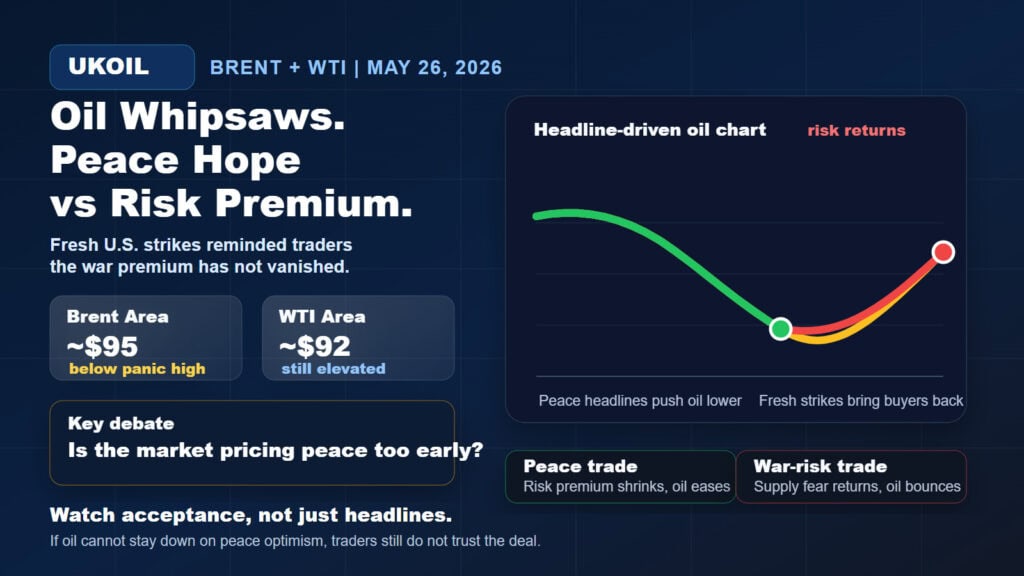
Oil is behaving more like a headline market than a normal commodity market right now. Brent crude and WTI crude are moving between two completely different narratives. One side of the market believes peace talks could reduce geopolitical tension and lower supply risk. The other side believes the Middle East situation is still unstable enough to keep a war premium inside oil prices. That is why oil sold off first on peace optimism, then quickly bounced after fresh U.S. strikes in southern Iran reminded traders that geopolitical risk has not disappeared.
What makes this setup interesting is that traders are no longer reacting only to inventory data or demand expectations. They are reacting to trust. The market is trying to decide one thing: Should oil still carry a geopolitical premium, or is the market becoming too optimistic about peace?
Reuters reported that Brent crude gained nearly 2% in early Asian trading after U.S. military strikes connected to Iranian missile facilities and boats. At the same time, peace negotiations are still being discussed publicly. That combination is creating confusion in the market. On one side, traders want to believe tensions may cool down. On the other side, every military headline reminds traders how fragile the situation still is. The Strait of Hormuz remains one of the biggest reasons why oil is reacting so aggressively. A large portion of global oil and gas trade moves through Gulf shipping routes, so even small changes in military risk can quickly affect oil prices.
Right now, Brent crude is trading around the mid-$90 area. That is below the recent panic highs, but still elevated enough to show traders have not fully removed the war-risk premium from the market. WTI is showing a similar structure in the low-$90 range.
For beginners, the logic is actually simple. When traders fear supply disruptions, oil usually rises. When traders believe geopolitical risk is easing, oil usually falls. Right now, both forces are fighting each other at the same time. Peace headlines push oil lower. Military headlines bring buyers back. That is why the chart feels unstable and fast-moving. This is not only a supply-and-demand market anymore. It is a confidence market.
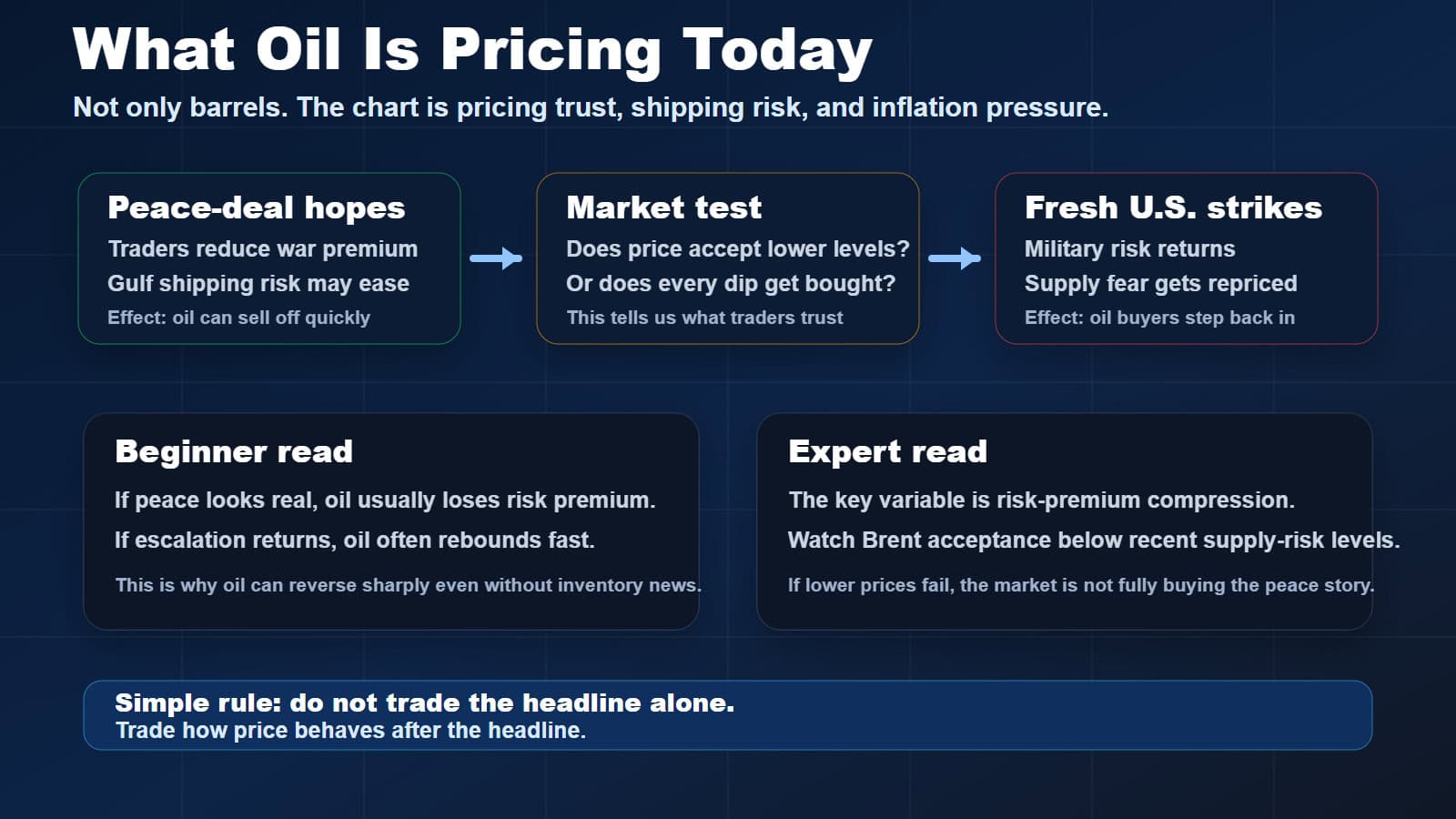
Oil is pricing trust, shipping risk, and geopolitical tension
The important part is that oil does not move alone. If oil prices stay elevated, inflation expectations can rise again. That can influence central bank expectations, bond yields, currencies, and overall market sentiment. Higher oil can also pressure airline stocks, transport companies, and inflation-sensitive sectors. So this is not just an oil-trader story. It is a broader macro story. Institutional traders are probably not asking only whether oil will go higher tomorrow or lower next week.
They are asking deeper questions.
- Is the geopolitical premium shrinking?
- Can traders really trust peace headlines?
- Will Gulf shipping risk improve meaningfully?
- Can oil remain weak, or does every dip continue attracting buyers?
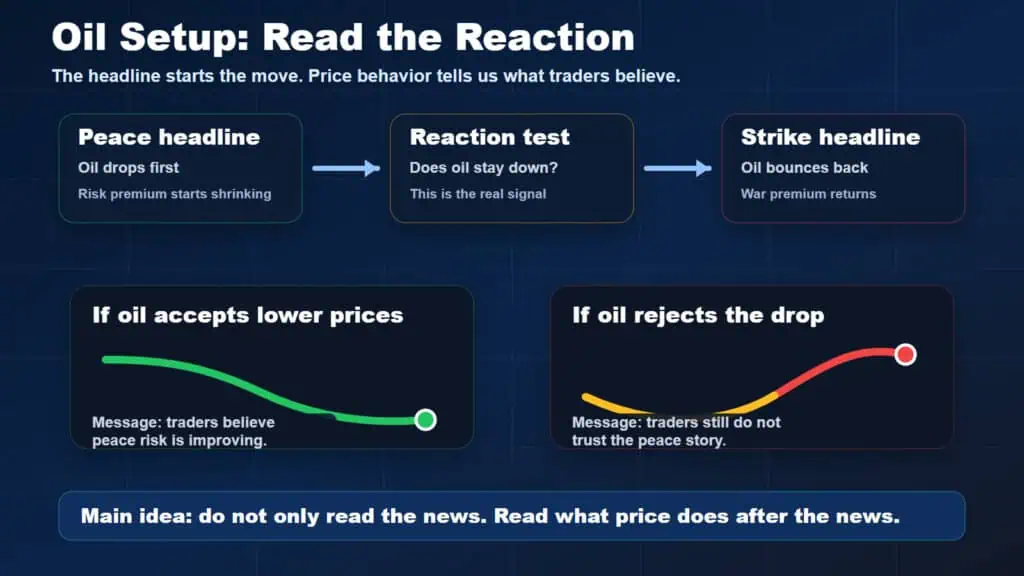
That last question may be the most important signal of all. If oil falls after peace headlines and stays weak, the market is accepting lower geopolitical risk. But if oil quickly rebounds after every selloff, it means traders still do not fully trust the peace narrative. That reaction tells the real story. From a chart perspective, Brent crude remains the cleaner market to watch because it reacts more directly to global supply concerns and Gulf-related risk.
If Brent continues holding below recent rebound zones, traders may continue treating rallies as temporary headline-driven moves. But if Brent starts reclaiming lost ground aggressively, it would suggest the market is once again pricing in geopolitical tension.
WTI is showing a similar pattern, but Brent remains the more important chart for tracking global risk sentiment.
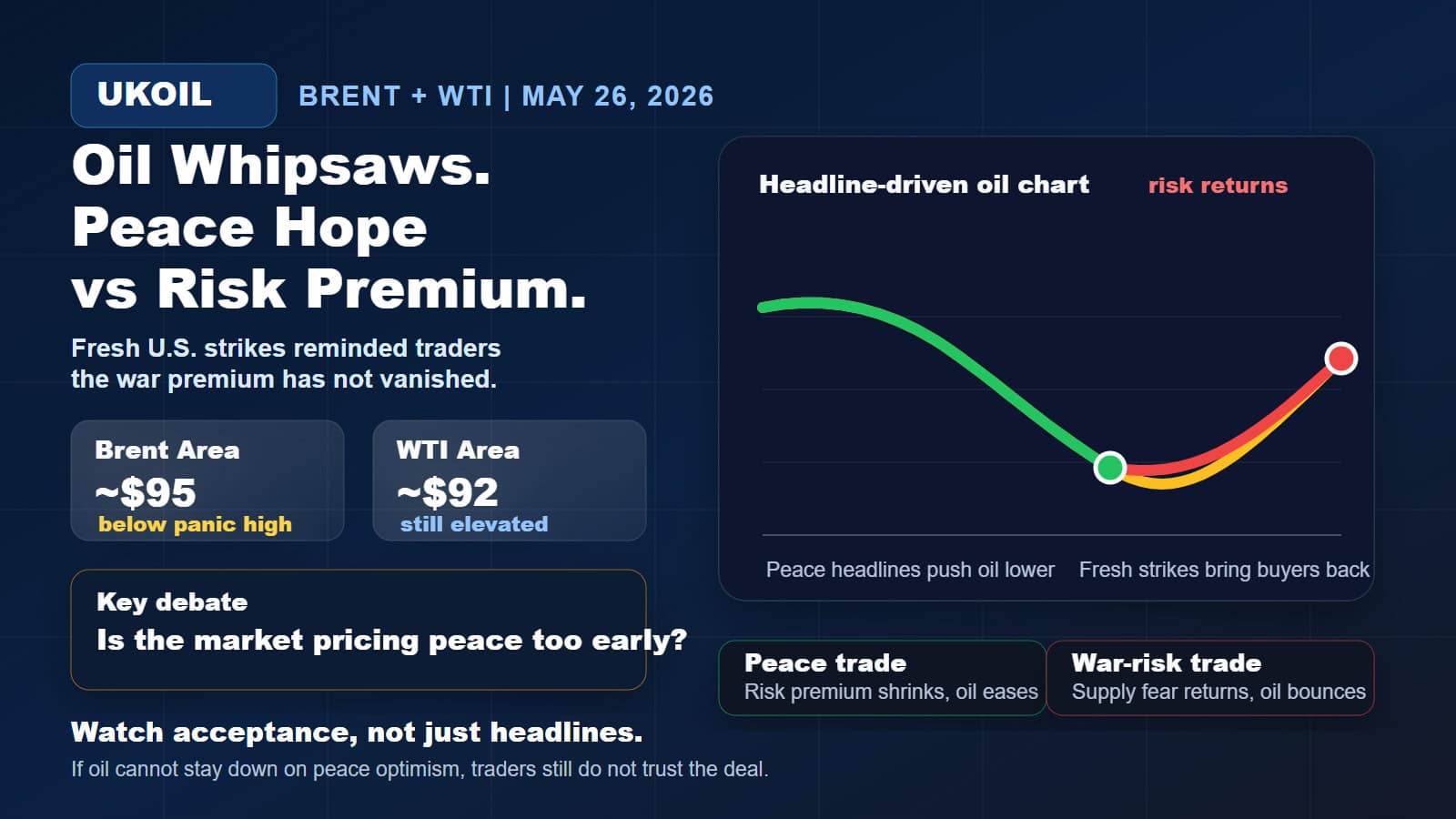
Brent and WTI continue reacting to shifting risk sentiment
Personally, I do not see this as a clean trending market yet. This looks more like a headline-driven range with emotional moves on both sides. Peace optimism can trigger sharp selloffs very quickly. But military escalation can bring buyers back just as fast. That is why blindly trading headlines can become dangerous in this environment. The better approach may be to watch how price behaves after the news. If oil drops and stays weak, traders are accepting lower risk. If oil drops but quickly recovers, the market is signaling that trust in the peace story is still low. That is the reaction that matters most.
The bigger takeaway is simple: Oil is currently trading trust, fear, and geopolitical uncertainty more than pure supply-demand fundamentals. The market wants to price peace, but price action still respects war risk. That makes this setup important not only for oil traders, but also for macro traders, stock traders, and currency traders watching inflation and global risk sentiment.
So the real question now is: Is this oil pullback the beginning of a genuine peace reset, or is the market pricing optimism too early while geopolitical risk is still alive beneath the surface?
Get free MCX ideas, chart setups, and analysis for the upcoming session: Commodity Tips →
Have you any questions/feedback about this article? Please leave your queries in the comment box for answers.

The way you mapped out the text notes makes this logic effortless to understand.