Discover the world of financial markets and trading with our comprehensive learning resources. Whether you’re a beginner or an experienced trader, our expert guidance and educational articles will help you develop your knowledge and skills.
Emotion plays an important role in many aspects of life. Most of the decision we take depend on our emotional quotient, either directly or indirectly. It is no different in investing. Though it is impossible to keep emotion out of the equation, it is imperative to keep it under control. In fact, the success rate of our buying/selling decision in stock market depends unswervingly on this factor. There are two extremes, between which decision-making swings like a pendulum. Most of us react to these extremes. We are either too excited to calculate the risk involved in buying a particular stock or too depressed to identify the intrinsic value of a stock when it is down. It is always important to take a balanced and an informed decision. Striking the balance is an art. It needs to be practiced over time. There are scores of channels, magazines and hundreds of analysts who often occupy our mind and ride us through different sectors and stocks. It is this ride which takes us to the extremes.
Seldom do we think about who gives them ideas?
How much do they make out of their own recommendations?
What are their intentions?
IF YOU ARE thinking thoughts of defeat problem, I urge you to rid yourself of such thoughts, for as you think defeat you tend to get it. Adopt the “I don’t believe in defeat” attitude.
I want to tell you about some people who have put this philosophy into effect with excellent results and shall explain the techniques and formulas which they used so successfully. If you read these incidents carefully and thoughtfully and believe as they did and think positively and put these techniques into operation, you too, can overcome defeats which at the present moment may seem inevitable.
I hope you are not like an “obstacle man” of whom I was told. He was called an obstacle man because, regardless of whatever suggestion was advanced, his mind instantly went to all possible obstacles in connection with it, but he met his match and learned a lesson which helped to change his negative attitude. It came about in the following manner.
The directors of his firm had a project under consideration which involved considerable expense and some definite hazards as well as success possibilities. In the discussions regarding this venture the obstacle man would invariably say, and always with a scholarly air (invariably this type acts wise, probably a cover-up for inner doubt feelings), “Now just a moment. Let’s consider the obstacles involved.”
Another man, who said very little but who was respected by his associates for his ability and achievements and for a certain indomitable quality which characterized him, presently spoke up and asked, “Why do you constantly emphasize the obstacles in this proposition instead of the possibilities?”
“Because,” replied the obstacle man, “to be intelligent one must always be realistic, and it is a fact that there are certain definite obstacles in connection with this project. What attitude would you take toward these obstacles, may I ask?”
The other man unhesitatingly replied, “What attitude would I take toward these obstacles? Why, I would just remove them, that’s all, and then I would forget them.”
“But,” said the obstacle man, “that is easier said than done. You say you would remove them and then you would forget them. May I ask if you have any technique for removing obstacles and for forgetting them that the rest of us have never discovered?”
A slow smile came over the face of the other man as he said, “Son, I have spent my entire life removing obstacles and I never yet saw one that could not be removed provided you had enough faith and guts and were willing to work. Since you want to know how it’s done, I will show you.”
He then reached into his pocket and took out his wallet. Under the isinglass window was a card on which were written some words. He shoved the wallet across the table and said, “There, son, read that. That is my formula, and don’t give me the song and dance that it won’t work either. I know better from experience.”
The obstacle man picked up the wallet and with a strange look on his face read the words to himself.
“Read them out loud,” urged the owner of the wallet.
This is what he read in a slow, dubious voice, “I can do all things through Christ which strengtheneth me.” (Philippians 4:13)
The owner of the wallet put it back in his pocket and said, “I have lived a long time and have faced a lot of difficulties in my time, but there is power in those words—actual power— and with them you can remove any obstacle.”
He said this with confidence and everybody knew he meant it. This positiveness, together with the facts of his experience which were known to all, for he was a remarkable man who had overcome many odds, and because of the further fact that he was not in any sense “holier than thou,” made his words convincing to the men around the table. At any rate, there was no more negative talk. The project was put into operation and, despite difficulties and risks, turned out successfully.
The technique used by this man is based on the primary fact about an obstacle which is—don’t be afraid of it. Practice believing that God is with you and that in combination with Him you have the power to handle it.
So the first thing to do about an obstacle is simply to stand up to it and not complain about it or whine under it but forthrightly attack it. Don’t go crawling through life on your hands and knees half-defeated. Stand up to your obstacles and do something about them. You will find that they haven’t half the strength you think they have.
A friend in England sent me a book by Winston Churchill entitled Maxims and Reflections. In this book Churchill tells of the British General Tudor, who commanded a division of the British Fifth Army which faced the great German assault in March 1918. The odds were heavily against him, but General Tudor knew how to meet an apparently immovable and un-defeatable obstacle. His method was simple. He merely stood and let the obstacle break on him and he, in turn, broke the obstacle.
Use that formula which the businessman suggested and you will develop this brand of powerful faith in God and in yourself. You will learn to know yourself, your own ability, your power to do things. To the degree to which your attitude shifts from negative to positive the mastery touch will come to you. Then, with assurance, you can say to yourself under any and all circumstances and mean it, “I don’t believe in defeat.”
For example, a woman sent her fifteen-year-old son to us. She said she wanted him “straightened out.” It annoyed her to no end that her boy could never get over 70 in any of his studies. “This boy has a great mind potentially,” she declared proudly.
“How do you know he has a great mind?” I asked. “Because he is my son,” she said. “I graduated from college magna cum laude”
The boy came in very glumly, so I asked, “What’s the matter, son?”
“I don’t know. My mother sent me to see you.”
“Well,” I commented, “You don’t seem to be burning with enthusiasm. Your mother says you get only 70’s.”
“Yes,” he said, “that’s all I get, and,” he added, “that isn’t the worst of it. I’ve even received less than that.”
“Do you think you have a good mind, son?” I asked.
My mother says I have. I don’t know—I think I’m awful dumb. Dr. Peale,” he said earnestly, “I study the stuff. At home I read it over once and then close the book and try to remember it. I repeat this process about three times, and then I think that if three times doesn’t get it into my head how am I ever going to get it into my head? And then I go to school thinking maybe I have it, and the teacher calls on me to say something, and I stand up and can’t remember a thing. Then,” he said, “examinations come along and I sit there and just get hot and cold all over and I can’t think of the answers. I don’t know why,” he continued. “I know that my mother was a great scholar. I guess I just haven’t got it in me.”
This negative thought pattern combined with the inferiority feeling stimulated by his mother’s attitude was of course overwhelming him. He froze up in his mind. His mother had never told him to go to school and study for the wonder and glory of learning knowledge. She was not wise enough to encourage him to compete with himself rather than with others. And she was constantly insisting that he duplicate her success in scholarship. Little wonder that under this pressure he froze mentally.
I gave him some suggestions that proved helpful. “Before you read your lessons, pause a moment and pray in this manner, ‘Lord, I know I have a good mind and that I can get my work.’ Then get yourself relaxed and read the book without strain. Imagine you are reading a story. Do not read it twice unless you wish. Simply believe that you got it on the first reading. Visualize the material as soaking in and germinating. Then next morning, as you go to school, say to yourself, ‘I have a wonderful mother. She is very pretty and sweet, but she must have been an old bookworm to get those high marks. And who wants to be an old bookworm anyway? I don’t want to become magna cum nothing. I only want to get through school creditably.’
“In class, when the teacher calls on you, quickly pray before answering. Then believe the Lord will at that moment help your mind to deliver. When an examination is given, affirm in prayer that God is releasing your mind and that the right answers are given you.”
The boy followed these ideas, and what marks do you think he got the following semester? Ninety! I am sure that this boy, having discovered the amazing work ability of the “I don’t believe in defeat philosophy,” will employ the amazing power of positive thinking in all the affairs of his life.
DEFEAT conclusion:
I could use so many illustrations of the manner in which men’s lives have been revamped by these procedures that this Article would grow to unwieldy size. Moreover, these are incidents and experiences out of everyday life that are in no way theoretical, but are entirely practical. My mail is literally filled with testimonials sent by people who, having heard or read accounts I have told of victorious life experiences, have felt moved to relate similar occurrences in their own lives.
As you finish this article please say the following line aloud: “I don’t believe in defeat.” Continue to affirm that until the idea dominates your subconscious attitudes.
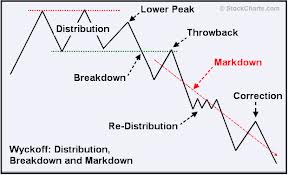
The Wyckoff Method is one of the four timeless approaches to market analysis (the other three being Dow Theory, Shabacker’s chart patterns, Elliott Wave Theory and Gann’s swing trading approach). It was developed in the early part of the 20th Century and has been continuously refined through the present day. The Wyckoff Method is a vital, classic approach to trading which reads the market through price bars and volume. Although technical indicators may be used, they are unnecessary under the Wyckoff Method.
Richard D. Wyckoff was a Wall Street broker and trader in the early part of the 20th Century. Wyckoff was a broker and witnessed the operations of the largest traders of his day first hand as an ‘insider’ and learned to translate their activities in the ticker tape and bar charts. As he watched traders and investors make poor trading decisions based on rumor, opinion and guesswork, he wrote a newsletter that quickly became so widely read on Wall Street that it would often affect stock prices. He later wrote courses for traders and books on tape reading (including the first day trader’s manual) and his experiences on the Street.
The Wyckoff Method has been used by astute traders for nearly 80 years. It is a complete method for understanding and trading the markets. It is used effectively by day traders, swing traders and investors in all markets including equities, commodities, index futures and FX with equal success. Many of today’s top market technicians acknowledge Wyckoff as the basis for their understanding of the markets, and the Method has spawned spin-offs such as VSA.
Dr. Gary Dayton is an expert in the Wyckoff Method. He has studied and applied Wyckoff for the past decade and has been mentored by an acknowledged Wyckoff master. Dr. Gary is also an outstanding educator of the Method who conveys the Wyckoff Method and principles in a simple and concise manner easily understood by his students.
Kind attention: this course is helpful for beginner and intermediate traders. It’s free for everyone. Advanced modules, trading strategies, and data (in-depth) are available for Moneymunch’s premium subscribers.
Get free important share market ideas on stocks & nifty tips chart setups, analysis for the upcoming session, and more by joining the below link: Stock Tips
Have you any questions/feedback about this article? Please leave your queries in the comment box for answers.
Disclaimer: The information provided on this website, including but not limited to stock, commodity, and forex trading tips, technical analysis, and research reports, is solely for educational and informational purposes. It should not be considered as financial advice or a recommendation to engage in any trading activity. Trading in stocks, commodities, and forex involves substantial risks, and you should carefully consider your financial situation and consult with a professional advisor before making any trading decisions. Moneymunch.com and its authors do not guarantee the accuracy, completeness, or reliability of the information provided, and shall not be held responsible for any losses or damages incurred as a result of using or relying on such information. Trading in the financial markets is subject to market risks, and past performance is not indicative of future results. By accessing and using this website, you acknowledge and agree to the terms of this disclaimer.
The two approaches to market timing—predictive and confirming—almost always give conflicting signals when analyzing movements of the same time domain. That is okay because they are used for different purposes and have different goals. If contrary opinion says that the market has reached bottom over the intermediate term, the other approach—trending indicators for the intermediate term—almost always indicates that the trend is still down. This is normal. Why? Because it is normal that investors become very bearish (furnishing us with buy signals using contrary opinion)as prices are plummeting and at their low. The large price drop makes the trend indicators point down, but the predictive indicators are showing that the end of the decline has been reached, and higher prices are ahead. However, there are times when the two approaches do not give conflicting signals, and these are very important to note. When predictive indicators such as contrary opinion strongly indicate higher prices, and the confirming indicators have already confirmed the start of a slight uptrend, that is the strongest buy signal there is. There is nothing more reliable or important than when this unusual situation happens. Why is this so? It is expected that, as prices move up, more and more investors will become bullish. When, however, the bearish sentiment stays high or even moves higher than prices also move higher, that is not expected, and so it is the sign of a very strong stock market. At these moments, what is happening is that no one believes the upward price movement is real or that it will last. This skepticism is the fuel needed to keep the movement going, usually for some time. The same holds true when both categories of indicators are confirming that prices are declining. If contrary opinion is extremely bullish and stock prices have already started down, so much so that trend-following indicators are confirming the downtrend, there is no more reliable or important sell indicator.
This is the Forth day of course in a series of 7 called “Your financial goals”
Insurance helps you protect what matters most in your life — your loved ones, your assets and your financial future. Insurance takes on many forms, some of which do double-duty as tax-advantaged investment, accumulation or retirement income vehicles, or ways to shape your estate plan.
Do you have the right insurance now?
Assessing your current coverage involves some reflection and review, starting with these questions:
How might unexpected events impact your family’s goals?
How will you provide for dependents if you’re unable to earn income or if you’re gone?
How do you determine home insurance policy coverages and auto liability coverage limits?
Forms of protection
Your financial plan may include a variety of financial solutions, such as cash management strategies, investments and insurance. To protect yourself against unexpected costs or events such as job loss, it’s essential to maintain cash reserves that you can access quickly, without penalties or loss of value. In addition to cash reserves, you might want to consider the following types of insurance:
Life insurance. The two basic types of life insurance are term insurance and permanent insurance. Term policies protect you for a fixed amount of time. Lifetime, or permanent, policies are designed to protect you and your family for the long-term. You can choose from life insurance products and coverage that offer a variety of benefit and premium levels, opportunity to grow assets in a tax deferred manner and more.
Long-term care insurance. According to the U.S. Department of Health and Human Services, about 70% of Americans who reach age 65 will need long-term care at some point in their lives. And more than 40% will need care in a nursing home.1 LTC insurance can help you protect your financial future and position you to give more to your loved ones.
Disability insurance. Without disability income insurance, a serious injury or illness could jeopardize your family’s income and lifestyle. Different policies offer varying benefit terms, coverage and definitions of disability.
Auto and home insurance. Make sure your coverage reflects the current value of your home and liability limits are appropriate for auto coverage with an annual review to protect your assets.
Other insurance considerations
A financial advisor can help you evaluate your current coverage needs. Together, you might consider:
When was the last time you reviewed your property and casualty coverage? Do you have the coverage you need?
Does umbrella coverage make sense for you?
What employee benefits are available to cover your insurance needs?
Message for you(Trader/Investor): Google has the answers to most all of your questions, after exploring Google if you still have thoughts or questions my Email is open 24/7. Each week you will receive your Course Materials. You can print it and highlight for your life Goal.
Your financial goals ( 7 Days – Comprehensive Course)
This Completes the List of Courses.
Wishing you a wonderful learning experience and the continued desire to grow your knowledge. Education is an essential part of living wisely and the Experiences of life, I hope you make it fun.
Learning how to profit in the Stock Market requires time and unfortunately mistakes which are called losses. Why not be profitable while you are learning?
This is the Third course in a series of 7 called ”Your financial goals”
It’s never too early to begin thinking about your legacy or to shape your estate plan. Contrary to what many people think, you don’t need to be a millionaire to have an estate plan. An estate plan is an important part of any ongoing financial planning process.
Your life, your dreams, your legacy
Your legacy transcends money — it also encompasses your values. Your wishes and dreams may include using your assets to help secure your family’s future or you may choose to support another cause close to your heart. This might be your favorite charity, your community, or your place of worship, to name a few.
Elements of an estate plan
A will lets you specify your wishes, including how you want your property distributed, who will administer your estate and who will care for your minor children.
A trust holds your assets for the benefit of one or more people (you, your spouse, your children). You’ll need an attorney’s assistance to create a trust.
Life insurance proceeds are paid to a beneficiary at your death.
Gifts are transfers of property made during your life to family, friends or charity.
Tax exclusions are available as important estate planning tools. Consult your tax professional for details.
Preparing to plan your estate
Designing a legacy consistent with your dreams and values is a personal, often complex process. But it’s well worth the effort. Consider setting up a family estate planning meeting to help improve communication, prevent conflicts and let your family know what’s important to you.
After giving some thought to your wishes, including the needs of family members you want to provide for, seek the professional guidance and estate planning advice you need from your attorney, tax professional and financial advisor. To help you value your estate, you’ll need to take into consideration:
Current income and likely future income
Annual expenses
Current assets and debts
Tax implications of federal transfer taxes, state death taxes and federal income taxes
Message for you(Trader/Investor): Google has the answers to most all of your questions, after exploring Google if you still have thoughts or questions my Email is open 24/7. Each week you will receive your Course Materials. You can print it and highlight for your life Goal.
Your financial goals (7 Days – Comprehensive Course)
Wishing you a wonderful learning experience and the continued desire to grow your knowledge. Education is an essential part of living wisely and the Experiences of life, I hope you make it fun.
Learning how to profit in the Stock Market requires time and unfortunately mistakes which are called losses. Why not be profitable while you are learning?

 Emotion plays an important role in many aspects of life. Most of the decision we take depend on our emotional quotient, either directly or indirectly. It is no different in investing. Though it is impossible to keep emotion out of the equation, it is imperative to keep it under control. In fact, the success rate of our buying/selling decision in stock market depends unswervingly on this factor. There are two extremes, between which decision-making swings like a pendulum. Most of us react to these extremes. We are either too excited to calculate the risk involved in buying a particular stock or too depressed to identify the intrinsic value of a stock when it is down. It is always important to take a balanced and an informed decision. Striking the balance is an art. It needs to be practiced over time. There are scores of channels, magazines and hundreds of analysts who often occupy our mind and ride us through different sectors and stocks. It is this ride which takes us to the extremes.
 IF YOU ARE thinking thoughts of defeat problem, I urge you to rid yourself of such thoughts, for as you think defeat you tend to get it. Adopt the “I don’t believe in defeat” attitude.
I want to tell you about some people who have put this philosophy into effect with excellent results and shall explain the techniques and formulas which they used so successfully. If you read these incidents carefully and thoughtfully and believe as they did and think positively and put these techniques into operation, you too, can overcome defeats which at the present moment may seem inevitable.
I hope you are not like an “obstacle man” of whom I was told. He was called an obstacle man because, regardless of whatever suggestion was advanced, his mind instantly went to all possible obstacles in connection with it, but he met his match and learned a lesson which helped to change his negative attitude. It came about in the following manner.
The directors of his firm had a project under consideration which involved considerable expense and some definite hazards as well as success possibilities. In the discussions regarding this venture the obstacle man would invariably say, and always with a scholarly air (invariably this type acts wise, probably a cover-up for inner doubt feelings), “Now just a moment. Let’s consider the obstacles involved.”
Another man, who said very little but who was respected by his associates for his ability and achievements and for a certain indomitable quality which characterized him, presently spoke up and asked, “Why do you constantly emphasize the obstacles in this proposition instead of the possibilities?”
“Because,” replied the obstacle man, “to be intelligent one must always be realistic, and it is a fact that there are certain definite obstacles in connection with this project. What attitude would you take toward these obstacles, may I ask?”
The other man unhesitatingly replied, “What attitude would I take toward these obstacles? Why, I would just remove them, that’s all, and then I would forget them.”
“But,” said the obstacle man, “that is easier said than done. You say you would remove them and then you would forget them. May I ask if you have any technique for removing obstacles and for forgetting them that the rest of us have never discovered?”
A slow smile came over the face of the other man as he said, “Son, I have spent my entire life removing obstacles and I never yet saw one that could not be removed provided you had enough faith and guts and were willing to work. Since you want to know how it’s done, I will show you.”
He then reached into his pocket and took out his wallet. Under the isinglass window was a card on which were written some words. He shoved the wallet across the table and said, “There, son, read that. That is my formula, and don’t give me the song and dance that it won’t work either. I know better from experience.”
The obstacle man picked up the wallet and with a strange look on his face read the words to himself.
“Read them out loud,” urged the owner of the wallet.
This is what he read in a slow, dubious voice, “I can do all things through Christ which strengtheneth me.” (Philippians 4:13)
The owner of the wallet put it back in his pocket and said, “I have lived a long time and have faced a lot of difficulties in my time, but there is power in those words—actual power— and with them you can remove any obstacle.”
He said this with confidence and everybody knew he meant it. This positiveness, together with the facts of his experience which were known to all, for he was a remarkable man who had overcome many odds, and because of the further fact that he was not in any sense “holier than thou,” made his words convincing to the men around the table. At any rate, there was no more negative talk. The project was put into operation and, despite difficulties and risks, turned out successfully.
The technique used by this man is based on the primary fact about an obstacle which is—don’t be afraid of it. Practice believing that God is with you and that in combination with Him you have the power to handle it.
So the first thing to do about an obstacle is simply to stand up to it and not complain about it or whine under it but forthrightly attack it. Don’t go crawling through life on your hands and knees half-defeated. Stand up to your obstacles and do something about them. You will find that they haven’t half the strength you think they have.
A friend in England sent me a book by Winston Churchill entitled Maxims and Reflections. In this book Churchill tells of the British General Tudor, who commanded a division of the British Fifth Army which faced the great German assault in March 1918. The odds were heavily against him, but General Tudor knew how to meet an apparently immovable and un-defeatable obstacle. His method was simple. He merely stood and let the obstacle break on him and he, in turn, broke the obstacle.
Use that formula which the businessman suggested and you will develop this brand of powerful faith in God and in yourself. You will learn to know yourself, your own ability, your power to do things. To the degree to which your attitude shifts from negative to positive the mastery touch will come to you. Then, with assurance, you can say to yourself under any and all circumstances and mean it, “I don’t believe in defeat.”
IF YOU ARE thinking thoughts of defeat problem, I urge you to rid yourself of such thoughts, for as you think defeat you tend to get it. Adopt the “I don’t believe in defeat” attitude.
I want to tell you about some people who have put this philosophy into effect with excellent results and shall explain the techniques and formulas which they used so successfully. If you read these incidents carefully and thoughtfully and believe as they did and think positively and put these techniques into operation, you too, can overcome defeats which at the present moment may seem inevitable.
I hope you are not like an “obstacle man” of whom I was told. He was called an obstacle man because, regardless of whatever suggestion was advanced, his mind instantly went to all possible obstacles in connection with it, but he met his match and learned a lesson which helped to change his negative attitude. It came about in the following manner.
The directors of his firm had a project under consideration which involved considerable expense and some definite hazards as well as success possibilities. In the discussions regarding this venture the obstacle man would invariably say, and always with a scholarly air (invariably this type acts wise, probably a cover-up for inner doubt feelings), “Now just a moment. Let’s consider the obstacles involved.”
Another man, who said very little but who was respected by his associates for his ability and achievements and for a certain indomitable quality which characterized him, presently spoke up and asked, “Why do you constantly emphasize the obstacles in this proposition instead of the possibilities?”
“Because,” replied the obstacle man, “to be intelligent one must always be realistic, and it is a fact that there are certain definite obstacles in connection with this project. What attitude would you take toward these obstacles, may I ask?”
The other man unhesitatingly replied, “What attitude would I take toward these obstacles? Why, I would just remove them, that’s all, and then I would forget them.”
“But,” said the obstacle man, “that is easier said than done. You say you would remove them and then you would forget them. May I ask if you have any technique for removing obstacles and for forgetting them that the rest of us have never discovered?”
A slow smile came over the face of the other man as he said, “Son, I have spent my entire life removing obstacles and I never yet saw one that could not be removed provided you had enough faith and guts and were willing to work. Since you want to know how it’s done, I will show you.”
He then reached into his pocket and took out his wallet. Under the isinglass window was a card on which were written some words. He shoved the wallet across the table and said, “There, son, read that. That is my formula, and don’t give me the song and dance that it won’t work either. I know better from experience.”
The obstacle man picked up the wallet and with a strange look on his face read the words to himself.
“Read them out loud,” urged the owner of the wallet.
This is what he read in a slow, dubious voice, “I can do all things through Christ which strengtheneth me.” (Philippians 4:13)
The owner of the wallet put it back in his pocket and said, “I have lived a long time and have faced a lot of difficulties in my time, but there is power in those words—actual power— and with them you can remove any obstacle.”
He said this with confidence and everybody knew he meant it. This positiveness, together with the facts of his experience which were known to all, for he was a remarkable man who had overcome many odds, and because of the further fact that he was not in any sense “holier than thou,” made his words convincing to the men around the table. At any rate, there was no more negative talk. The project was put into operation and, despite difficulties and risks, turned out successfully.
The technique used by this man is based on the primary fact about an obstacle which is—don’t be afraid of it. Practice believing that God is with you and that in combination with Him you have the power to handle it.
So the first thing to do about an obstacle is simply to stand up to it and not complain about it or whine under it but forthrightly attack it. Don’t go crawling through life on your hands and knees half-defeated. Stand up to your obstacles and do something about them. You will find that they haven’t half the strength you think they have.
A friend in England sent me a book by Winston Churchill entitled Maxims and Reflections. In this book Churchill tells of the British General Tudor, who commanded a division of the British Fifth Army which faced the great German assault in March 1918. The odds were heavily against him, but General Tudor knew how to meet an apparently immovable and un-defeatable obstacle. His method was simple. He merely stood and let the obstacle break on him and he, in turn, broke the obstacle.
Use that formula which the businessman suggested and you will develop this brand of powerful faith in God and in yourself. You will learn to know yourself, your own ability, your power to do things. To the degree to which your attitude shifts from negative to positive the mastery touch will come to you. Then, with assurance, you can say to yourself under any and all circumstances and mean it, “I don’t believe in defeat.”