
What is Repo Rate and Reverse Repo Rate?

Click Here to Help in future (Stock Market Trading)

A Repo is a item of money market. Generally, Reserve Bank and Commercial Banks engage in repo transactions but not limited to these two. Individuals, banks, financial institutes can also engage in Repo. It is also know as Repurchase Agreement.

The rate at which the RBI gives money to commercial banks is called Repo Rate. This item is of monetary policy. When banks have any shortage of funds they can borrow from the RBI. So, Repo rate is interest rate which is less than Bonds as the borrowing is collateral.

A reducing in the repo rate benefits banks get money at a cheaper rate and vice versa. The repo rate in India and same as the discount rate in the US.

Reverse Repo rate is simply the rate at that the RBI borrows money from commercial banks. Banks are always happy to lend money to the RBI since their money are in safe and secure hands with a good interest. An additional, reverse repo Reserve Bank borrows money from banks by lending securities. The interest paid by Reserve Bank in this case is called reverse repo rate.

repo-rate

What is CRR ? (Cash Reserve Ration)

What is SLR ?

Get free important share market ideas on stocks & nifty tips chart setups, analysis for the upcoming session, and more by joining the below link: Stock Tips

Have you any questions/feedback about this article? Please leave your queries in the comment box for answers.

Disclaimer: The information provided on this website, including but not limited to stock, commodity, and forex trading tips, technical analysis, and research reports, is solely for educational and informational purposes. It should not be considered as financial advice or a recommendation to engage in any trading activity. Trading in stocks, commodities, and forex involves substantial risks, and you should carefully consider your financial situation and consult with a professional advisor before making any trading decisions. Moneymunch.com and its authors do not guarantee the accuracy, completeness, or reliability of the information provided, and shall not be held responsible for any losses or damages incurred as a result of using or relying on such information. Trading in the financial markets is subject to market risks, and past performance is not indicative of future results. By accessing and using this website, you acknowledge and agree to the terms of this disclaimer.

What is Nifty Bees?

NIFTY BEES is the first Exchange Traded Fund in India, which aims to offer investment profits that directly match to the total returns of Stocks as displayed by the S&P CNX Nifty Index. It provides you the most diversified exposure at lowest possible unit size. Roughly speaking, value of Nifty bees will be 1/10th value of the current Nifty price.

Nifty Bees can be purchased or sold like a share by using any NSE Stock broker at prices available on the screen. The fundamental portfolio of Nifty BeES very closely duplicated of the S&P CNX Nifty. That’s why, Nifty BeES tracks the movement of S&P CNX Nifty.

Why NFITYBEES suggested?

  • NiftyBeeS is Less price which is listed and traded on the NSE, Nifty BeES can be bought or sold, although the trading day just by a call to your broker. This gives you the power to answer fast to changes in the market. You can place limit orders. Nifty BeES can be held in your DP account with other portfolio holdings.
  • It is Simple which overall performance of Nifty BeES is just the result of performance of shares in the S&P CNX Nifty Index and demand & supply in the market. There is no Fund manager bias.
  • Nifty BeES duplicates the S&P CNX Nifty, investors can know at any given point of time where and how much is invested in each stock.
  • While buying a single stock, one has to analyze the stock, management quality, future prospects and current valuation, which is not the case in ETF because Investing in just one Stock gives exposure to fifty shares of the S&P CNX Nifty. This allows investors to spread risk with one single decision.
  1. What is the Meaning of Sensex ?
  2. What is the definition of Nifty ?
  3. List of Nifty 50 Stock

Get free important share market ideas on stocks & nifty tips chart setups, analysis for the upcoming session, and more by joining the below link: Stock Tips

Have you any questions/feedback about this article? Please leave your queries in the comment box for answers.

Disclaimer: The information provided on this website, including but not limited to stock, commodity, and forex trading tips, technical analysis, and research reports, is solely for educational and informational purposes. It should not be considered as financial advice or a recommendation to engage in any trading activity. Trading in stocks, commodities, and forex involves substantial risks, and you should carefully consider your financial situation and consult with a professional advisor before making any trading decisions. Moneymunch.com and its authors do not guarantee the accuracy, completeness, or reliability of the information provided, and shall not be held responsible for any losses or damages incurred as a result of using or relying on such information. Trading in the financial markets is subject to market risks, and past performance is not indicative of future results. By accessing and using this website, you acknowledge and agree to the terms of this disclaimer.

What is Sensex : Definition & History & Finance

SENSEX is the short term for the words “Sensitive Index” and is associated with the Bombay (Mumbai) Stock Exchage (BSE).

What is meaning of Sensex?

The SENSEX was first formed on 1-1-1986 and used the market capitalization of the 30 most traded stocks of Sensex. It is biggest and oldest index. The base was 1979 and taken as 100. The 30 scrips of 1986 and no more the same – some have been removed while some have been added. At irregular intervals, the Bombay Stock Exchange (BSE 50) authorities review and modify its composition to make sure it reflects current market conditions. Actually, Sensex is nothing… I will post very soon about sensex calculation & Sensex history

Today the Sensex constitutes of the following companies:

Company Name (Industry)
1.    ACC (Cement – Major)
2.    Bharti Airtel (Telecommunications – Service)
3.    BHEL (Engineering – Heavy)
4.    DLF (Construction & Contracting – Real Estate)
5.    Grasim (Diversified)
6.    HDFC Bank (Banks – Private Sector)
7.    HDFC (Finance – Housing)
8.    Hindalco (Aluminium)
9.    HUL (Personal Care)
10.    ICICI Bank (Banks – Private Sector)
11.    Infosys (Computers – Software)
12.    ITC (Cigarettes)
13.    Jaiprakash Associates (Construction & Contracting – Civil)
14.    Larsen & Toubro (Diversified)
15.    Mahindra and Mahindra (Auto – Cars & Jeeps)
16.    Maruti Suzuki (Auto – Cars & Jeeps)
17.    NTPC (Power – Generation/Distribution)
18.    ONGC (Oil Drilling And Exploration)
19.    Ranbaxy Labs (Pharmaceuticals)
20.    Reliance Communications (Telecommunications – Service)
21.    Reliance Industries Limited (Diversified)
22.    Reliance Infrastructure (Power – Generation/Distribution)
23.    State Bank of India (Banks – Public Sector)
24.    Sterlite Industries (Metals – Non Ferrous)
25.    Sun Pharma (Pharmaceuticals)
26.    Tata Motors (Auto – LCVs/HCVs)
27.    Tata Power (Power – Generation/Distribution)
28.    Tata Steel (Steel – Large)
29.    TCS (Computers – Software)
30.    Wipro (Computers – Software)

Sexsen is now in 2012

Get free important share market ideas on stocks & nifty tips chart setups, analysis for the upcoming session, and more by joining the below link: Stock Tips

Have you any questions/feedback about this article? Please leave your queries in the comment box for answers.
Disclaimer: The information provided on this website, including but not limited to stock, commodity, and forex trading tips, technical analysis, and research reports, is solely for educational and informational purposes. It should not be considered as financial advice or a recommendation to engage in any trading activity. Trading in stocks, commodities, and forex involves substantial risks, and you should carefully consider your financial situation and consult with a professional advisor before making any trading decisions. Moneymunch.com and its authors do not guarantee the accuracy, completeness, or reliability of the information provided, and shall not be held responsible for any losses or damages incurred as a result of using or relying on such information. Trading in the financial markets is subject to market risks, and past performance is not indicative of future results. By accessing and using this website, you acknowledge and agree to the terms of this disclaimer.

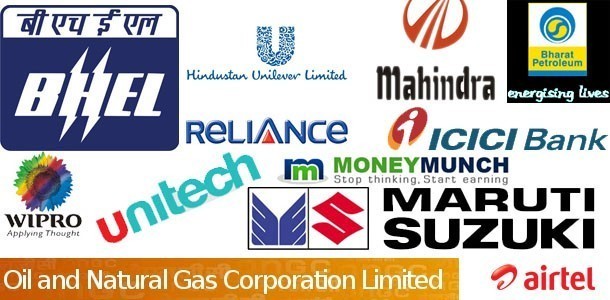
Index Nifty: List of Nifty 50 stocks & NIFTY Companies list

Index Nifty: This is the List of Stocks included in the S&P CNX NSE Nifty, Nifty movement is depend on this stocks. The stocks which are included in the composition of the NSE Nifty 50 are changed on certain event. So it’s called as index nifty.

List-of-Nifty-50-stocks

You may also be interested in reading more about:

1 ABB Ltd.

2 ACC Ltd.

3 Ambuja Cements Ltd.

4 Axis Bank Ltd.

5 Bharat Heavy Electricals Ltd.

6 Bharat Petroleum Corporation Ltd.

7 Bharti Airtel Ltd

9 Cipla Ltd.

10 DLF Ltd.

11 GAIL (India) Ltd.

12 HCL Technologies Ltd.

13 HDFC Bank Ltd.

14 Hero Honda Motors Ltd.

15 Hindalco Industries Ltd.

16 Hindustan Unilever Ltd.

17 Housing Development Finance Corporation Ltd.

18 I T C Ltd.

19 ICICI Bank Ltd.

20 Idea Cellular Ltd.

21 Infosys Technologies Ltd.

22 Infrastructure Development Finance Co. Ltd.

23 Jaiprakash Associates Ltd.

24 Jindal Steel & Power Ltd. 25 Kotak Mahindra Bank Ltd.

26 Larsen & Toubro Ltd.

27 Mahindra & Mahindra Ltd. 28 Maruti Suzuki India Ltd.

29 NTPC Ltd.

30 Oil & Natural Gas Corporation Ltd.

31 Power Grid Corporation of India Ltd.

32 Punjab National Bank 33 Ranbaxy Laboratories Ltd.

34 Reliance Capital Ltd.

35 Reliance Communications Ltd.

36 Reliance Industries Ltd.

37 Reliance Infrastructure Ltd.

38 Reliance Power Ltd.

39 Siemens Ltd.

40 State Bank of India

41 Steel Authority of India Ltd.

42 Sterlite Industries (India) Ltd.

43 Sun Pharmaceutical Industries Ltd.

44 Suzlon Energy Ltd.

45 Tata Consultancy Services Ltd.

46 Tata Motors Ltd.

47 Tata Power Co. Ltd.

48 Tata Steel Ltd.

49 Unitech Ltd.

50 Wipro Ltd.

Get free important share market ideas on stocks & nifty tips chart setups, analysis for the upcoming session, and more by joining the below link: Stock Tips

Have you any questions/feedback about this article? Please leave your queries in the comment box for answers.

Disclaimer: The information provided on this website, including but not limited to stock, commodity, and forex trading tips, technical analysis, and research reports, is solely for educational and informational purposes. It should not be considered as financial advice or a recommendation to engage in any trading activity. Trading in stocks, commodities, and forex involves substantial risks, and you should carefully consider your financial situation and consult with a professional advisor before making any trading decisions. Moneymunch.com and its authors do not guarantee the accuracy, completeness, or reliability of the information provided, and shall not be held responsible for any losses or damages incurred as a result of using or relying on such information. Trading in the financial markets is subject to market risks, and past performance is not indicative of future results. By accessing and using this website, you acknowledge and agree to the terms of this disclaimer.

What is the definition of nifty: Nifty definition

Click Here to Help in future (Stock Market Trading)

Meaning-of-nifty

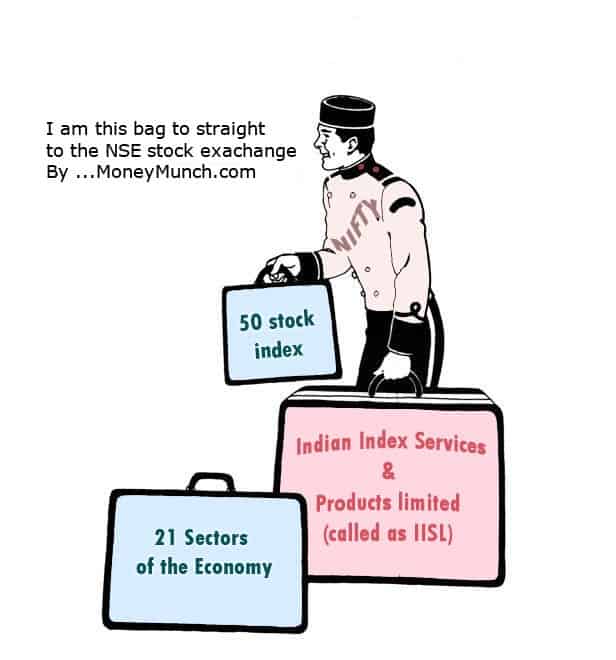
Nifty Index Definition: S&P CNX Nifty is varied 50 Stock Index construction for 21 sectors of the economy. It is utilized for a variety of purposes like benchmarking fund portfolios, index based derivatives and index funds. Nifty Index is relating to NSE Stock Exchange, Sensex Sensex is for BSE Stock Exchange.


Indian Index Services & Products limited(also known as IISL) owns NIFTY. ISSL is a joint project of NSE & CRISIL. But CRISIL is a subsidiary of standard and Poor, which labeled as S&P NIFTY or, S&P CNX NIFTY.


  • The traded value due to the last six months of all Nifty stocks is around 44.89% of the traded value of all stocks on the NSE
  • Nifty stocks express about 58.64% of the total market exploitation as on March 31, 2008.
  • Impact cost of the S&P CNX Nifty for a portfolio size of Rs.2 crore is 0.15%
  • S&P CNX Nifty is professionally managed and is perfect for derivatives trading.

Above information is what is the definition of nifty…

Get free important share market ideas on stocks & nifty tips chart setups, analysis for the upcoming session, and more by joining the below link: Stock Tips

Have you any questions/feedback about this article? Please leave your queries in the comment box for answers.

Disclaimer: The information provided on this website, including but not limited to stock, commodity, and forex trading tips, technical analysis, and research reports, is solely for educational and informational purposes. It should not be considered as financial advice or a recommendation to engage in any trading activity. Trading in stocks, commodities, and forex involves substantial risks, and you should carefully consider your financial situation and consult with a professional advisor before making any trading decisions. Moneymunch.com and its authors do not guarantee the accuracy, completeness, or reliability of the information provided, and shall not be held responsible for any losses or damages incurred as a result of using or relying on such information. Trading in the financial markets is subject to market risks, and past performance is not indicative of future results. By accessing and using this website, you acknowledge and agree to the terms of this disclaimer.

Learn Stock Market Trading

Where do you go to learn stock trading? It is awfully strange and sometimes tragic that most of us actually learn it through hit-or-miss techniques, on our own, but there is no need for this. The Internet is full of resources that will actually teach you how to trade without risking your life’s savings. In the old days, the only people who could only trade stocks were either the traders on the floor, or people with a LOT of money to buy and sell stocks. They would hire a trader who would take a cut off the top. Up until around 15 years, ago you could trade stocks through a company, but again, they would hit you up for commissions and management fees, making small changes in the price of a stock meaningless. A stock would have to move a lot in order to make a purchase or sale worthwhile for you. Ordinary people like you and me did not learn stock trading until the late 90’s when online brokerages began to open up. With the advent of small trading fees and no management fees, it was then a viable option to trade small amounts of stock, even within the same day – day trading was born. As this evolved, most people began to learn stock trading by simply talking to each other. CNBC was only founded in 1989 and if you did not have cable television, you did not get it. You could read the Wall Street Journal, of course, but you couldn’t really learn stock trading by perusing it mostly all day. So, online groups were formed by people who traded in their bedroom. Eventually those people who figured out how to do it safely and profitably began to produce products – websites, books, e-books, and programs – that helped others to do the same thing. A new industry was born and trading stocks for a living became a viable option for a lot of people. Of course, a lot of that changed when the economy came tumbling down in 2002 and again this year. Some traders realized that they were putting a little too much trust in the wrong people and lost a lot of money in these downturns. Because of the volatility that the market has seen in the past decade, it is important that if you are going to trade regularly and put a lot of money out there, that you really know what you are doing. If you truly want to learn stock trading, one of the best places to start are websites like. This website has one of the most well-respected and authoritative courses on day trading available anywhere. Whether you are new to day trading, or are finding that the techniques you are using aren’t working and you need guidance, then Trade Stocks American can help you find your way. You can make a lot of money by day trading, but only if you do it the right way. This site can help you find your niche and start making money from day one.

Learn stock trading by using practice software that allows individuals to set up fake portfolios and make pretend buys and sales. Avoid jumping into the stock market without some experience with advice from a financial analyst in this free video on the stock market.


Continue reading